
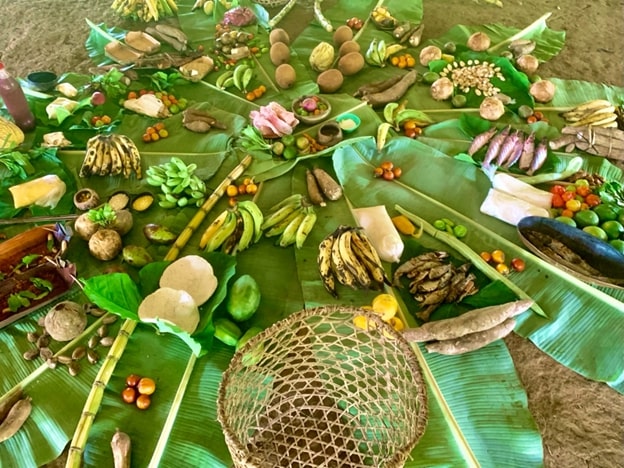
A Taste of Ticuna - The Revival of Ancestral Recipes
In the Amazon, the traditional recipes of the Ticuna communities (one of the indigenous ethnic groups), are a precious heritage passed down and continually refined through generations, carrying deep historical, cultural, and ecological wisdom. However, traditional cooking methods have gradually disappeared, especially among the younger generation. To protect this invaluable knowledge, the women of one Ticuna community have spontaneously formed an innovative group called “Sabores y Sabores Ticuna,” dedicated to reviving traditional recipes. They pass down the traditions, incorporate new ideas, sparking the younger generation’s interest in Ticuna culture and the natural environment.
Reviving Tradition, Passing Down the Flavors of History
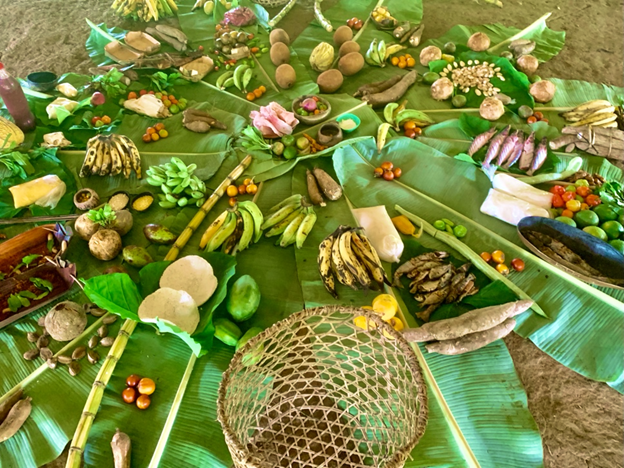
The Saberes y Sabores Ticuna group regularly holds knowledge-sharing activities focused on teaching, preparing, and innovating Ticuna dishes. These activities are varied, not only limited to cooking but also extending to the entire food process, from farm to table. Members often visit the chagras (farm systems) together, where they share seeds, participate in minga (collective labor), and learn from each other about different types of food. Additionally, the group invites elderly women who are skilled in pottery and basket weaving to teach the making of traditional farming tools and kitchen utensils. These tools bear witness to the long history of the Ticuna people, carrying the deep traditions of their practices.
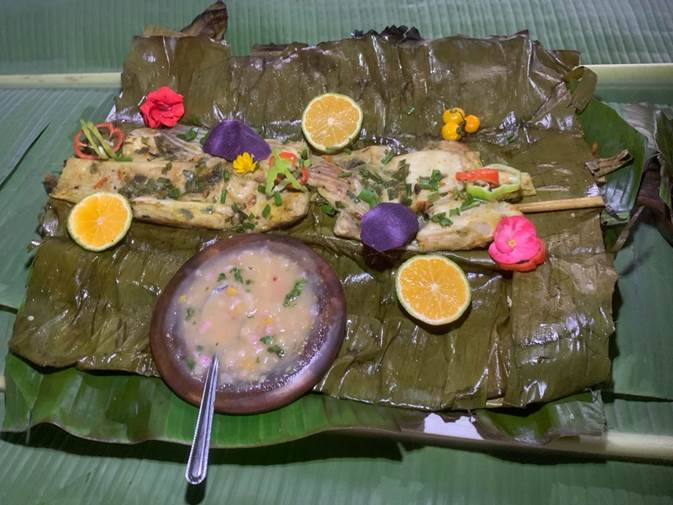
Patarashca, one of the traditional foods prepared by Ticuna women
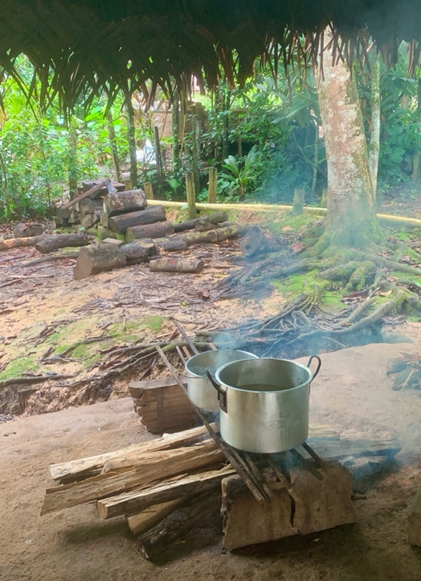
Besides, they also like to cook together in the Maloca (traditional house). As the fire rise, the grandmothers skillfully peel cassava and spreading kukuma (local spice) on fish. Traditional Ticuna dishes—such as Patarsca, Merú, Mazamorra, and Pescado Asado—are prepared, taught, and passed down one after another. The prepared dishes are then shared with the group members and the community. This act of sharing food has a profound impact on the community, with children rediscovering an interest to eat and learn traditional recipes. The group leader Victoria proudly says, “In the past, most children didn’t like to eat mojojoi (a type of insect), but since we started making it, so many kids have begun trying it.” She goes on to say that they hope to bring these delicious foods back into daily life.
Innovating Recipes, Breathing New Life into Tradition
What they’re doing goes beyond merely preserving ancestral recipes. By combining the wisdom of their ancestors with new techniques and spices, they boldly innovate, giving traditional dishes a fresh life. Organization member, winner of Columbia National Kitchen Award, Benilda shared how she initially knew nothing about traditional cooking but is now proficient and has even started to innovate herself. For example, she learned the traditional method of making tucupí—a seasoning made from fermented cassava liquid—and improved the cooking time to make it more flavorful. She extended the usual cooking time from a few hours to eight, giving the tucupí a deeper taste.
Innovation doesn’t only apply to the recipes themselves; the methods of transmission are also evolving. In the past, recipes were passed down orally, but now, more and more young women who are educated can read and write, and use smartphones and computers. More and more knowledge about traditional foods and recipes is being recorded through text, photos, and videos.
Preserving Memories, The Kitchen as a Guardian of Culture
“I dream of continuing to save more traditional recipes. We’ve designed the kitchen in a traditional style so that grandmothers can continue teaching us, because there are still some recipes we haven’t saved,” Benilda said. A traditional kitchen is not just a place to cook; it is a space for learning and passing down knowledge. The young people follow their grandmothers, learning the steps of each dish, feeling the pressure of the cutting knife, mastering the timing of fire, and listening to the cultural stories and wisdom behind it all. For example, almost every traditional Ticuna dish includes chili pepper. This is because, long ago, jaguars often attacked villages, particularly when people were hunting or children were playing outside. To protect the community, the ancestors of the Ticuna believed that adding chili pepper would scare the jaguars away. This tradition represents not just survival wisdom, but also a sense of protection for family and community. In this context, chili pepper is not only a spice; it symbolizes holism, responsibility, and the safeguarding of loved ones.
More importantly, Ticuna women are establishing a deeper connection with nature through food. “Every plant has their mother”, they understand that every tree, every plant, every fish, every piece of land, and even every beam of sunlight has its own unique soul. In their worldview, food is not just something to fill the stomach; it is a vital link between the forest, rivers, animals, and all other natural elements. They view these aspects of nature as “soulful partners,” not mere resources or commodities, so every harvest, cultivation, or cooking act is an expression of coexistence and gratitude to nature.
Indigenous Education Sovereignty: Rebuilding Identity and Values
The ancestral recipes of the Ticuna are unique, but the way they are reviving them holds valuable lessons for the wider world. From the perspective of education and development theory, there are many insights to be gained from this effort. As Victoria said, “This organization always comes from the community.” Laura Rival, an anthropologist specializing in Latin American indigenous society and environment points out that every culture has its own unique context. Echoing this perspective, Michelle Bishop, a researcher specializing in indigenous education, believes true Indigenous education sovereignty is essential—it provides an alternative education choice based on Indigenous values, ontologies, and methodologies. This kind of education is not just about restoring traditional rights, but also about redefining culture and identity in the context of modernity and globalization. Dear readers, do you also miss the food your grandmother used to make? What do you think of the Ticuna women’s approach to indigenous education sovereignty? How might you apply these ideas and methods in your own life? We invite you to share your thoughts with us.